What Is Sanatan Dharma?
The phrase Sanatan Dharma is often translated as "eternal religion," but its meaning is richer than any single English word can carry. Sanatan means that which is eternal, everlasting, enduring — that which does not pass away with the passing of ages. Dharma means law, duty, righteousness, the way of living in harmony with truth. Together, the words point to a way of life that does not belong to any one time or place because it is grounded in truths older than the world itself.
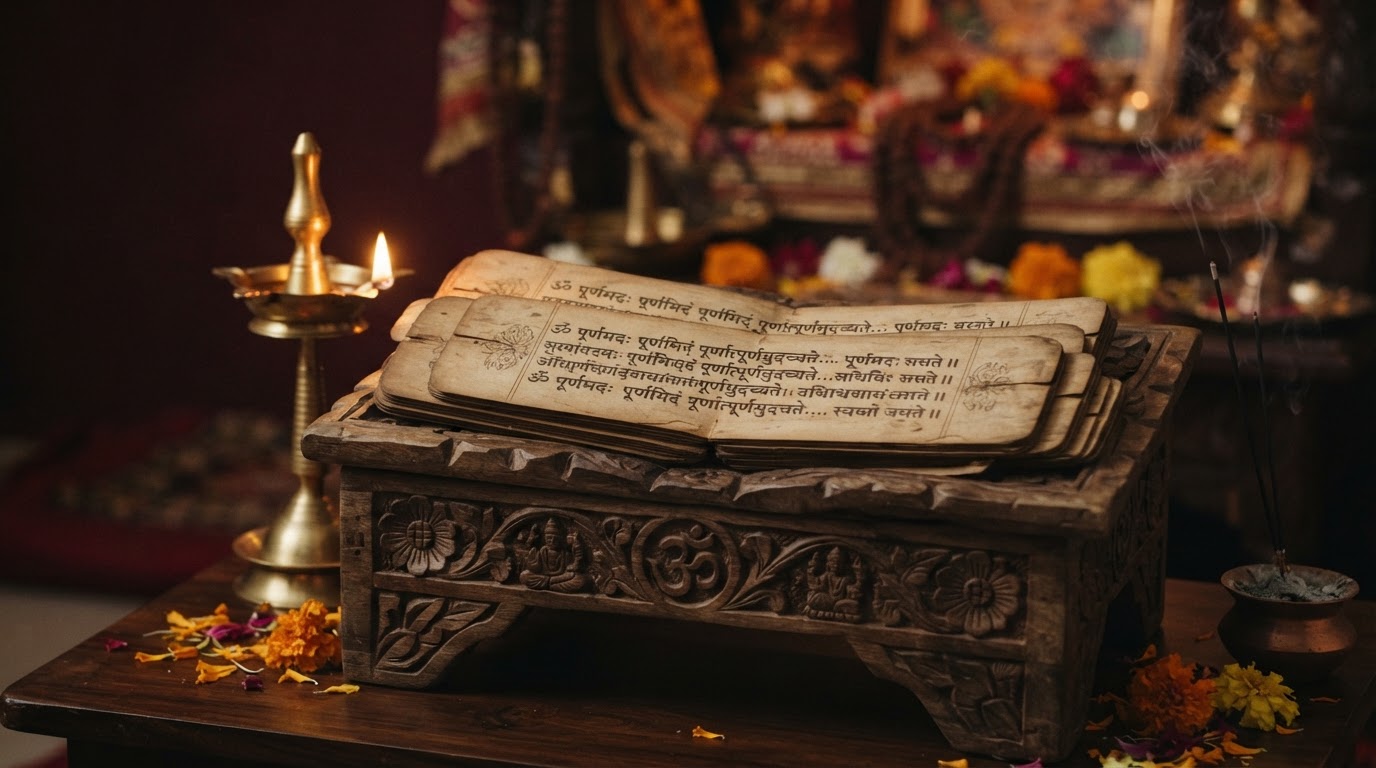
For the Hindu tradition, Sanatan Dharma is not a set of rules handed down once and fixed forever. It is a living inheritance, renewed in every generation by those who return to its source and live it anew. The Vedas are that source. They are called Shruti — that which was heard, the wisdom heard by the ancient seers in the depths of contemplation and passed down for the upliftment of all.
The Vedas as the Foundation
Arya Samaj holds the Vedas to be the highest and original scripture of Sanatan Dharma. Maharshi Dayanand Saraswati taught that the four Vedas — Rigveda, Yajurveda, Samaveda, and Atharvaveda — contain the self-evident truths upon which all later Hindu thought rests. The Upanishads, the philosophical heart of the Vedas, were called Vedanta, the end of the Vedas, because they unfold the deepest meaning that the Vedic mantras point toward.
To return to the Vedas, then, is not to turn one's back on the rest of the tradition. It is to return to the root from which the whole tree grows. Every branch — every later school, story, and practice — is best understood in the light of that original wisdom. When we know the root, we can tell which branches are healthy and which have grown tangled. When we know the foundation, we can build with confidence.
Truth That Endures
What makes a teaching Sanatan — eternal — is not its age but its truth. A teaching endures because it corresponds to the nature of things: to the nature of the mind, to the nature of the world, and to the nature of the divine. The Vedas speak of Sat — truth, or that which is — and of Rita, the cosmic order by which all things are held in harmony. To live by Dharma is to align oneself with this order, to live truthfully, compassionately, and wisely.
This is why the values of the Vedas feel as fresh today as they did thousands of years ago. Honesty is not a fashion that passes. Compassion is not a custom that fades. The dignity of every soul is not a doctrine that ages. These are reflections of the eternal in the life of every person, and they require no defence other than living them.
Reason Within the Eternal
One of the gifts Arya Samaj draws from the Vedas is the freedom of reason. The ancient seers did not ask for blind belief. They asked for inquiry — to examine, to question, to test, and to live by what one finds to be true. The Ishopanishad, one of the shortest and most revered, opens with a vision of the divine pervading all things and closes with a prayer for the full span of life and the clear seeing that comes through it.
Sanatan Dharma, understood this way, is not a closed gate but an open door. It does not ask us to surrender our minds but to bring them to the deepest questions — what is real, what is good, how shall we live — and to walk through that door with both faith and understanding.
The Eternal in Everyday Life
Sanatan Dharma is not meant only for the philosopher or the recluse. It is a way of life for the household, the workplace, and the community. When a parent teaches a child to speak truthfully, that is Sanatan Dharma. When a neighbour helps another without thought of return, that is Sanatan Dharma. When we pause to give thanks before a meal, or gather around the sacred fire to renew our vows, that is Sanatan Dharma, alive in the ordinary moments of an ordinary day.
The eternal way is not far away. It is here, in the choices we make and the values we live. And it is renewed every time someone sincerely takes it up — which is why each generation matters, and why each of us is invited to carry it forward.
Come and Renew It With Us
The best way to understand Sanatan Dharma is to experience it lived in community. Join us at the monthly Havan, held every second Sunday from 3 to 6 p.m. at the Hindu Temple of Ottawa-Carleton, 4835 Bank Street, Ottawa. Around the sacred fire, the oldest prayers of our tradition are made new again, and the eternal way finds fresh life in our own time and place. All are welcome — come as you are.