A Voice That Called Us Home
In 1875, in the midst of a changing India, a voice rose that would echo across generations. Maharshi Dayanand Saraswati did not call people toward something new. He called them home — back to the Vedas, back to the first and oldest wisdom of our tradition, back to the truths that had been the foundation of Hindu life since its dawn. His cry, simple and powerful, became the heart of the Arya Samaj: "Back to the Vedas."
To understand that call, we must understand what he saw. In his time, as in every age, the living tradition had gathered layers — some beautiful, some heavy. Practices had grown rigid. Social divisions had hardened. The meaning of the Vedas, once sung and studied by every household, had grown distant, known only to a few. Devotion had sometimes become dependence. And the very values the tradition was meant to uphold — equality, truth, the dignity of every soul — had at times been buried beneath custom.
Dayanand's answer was not to abandon the tradition. It was to renew it from within, by returning to its source.
Why the Vedas?
Why go back to the Vedas, and not to some later text? Because the Vedas are the root. Maharshi Dayanand held that the four Vedas are the original and self-existent revelation of Sanatan Dharma, the oldest and most authoritative of our scriptures. Everything later — the Upanishads, the Darshanas, the great epics, the teachings of countless saints — is, at its best, an unfolding of truths already present in seed within them.
When a tree's branches grow tangled, the gardener does not cut down the tree. The gardener returns to the root, clears away what does not belong, and lets the healthy growth resume. So it is with a living tradition. To return to the Vedas is to return to the root from which all healthy growth proceeds, and to measure every later branch by the health of that root.
Reform as Renewal
The reforms Dayanand advocated flowed directly from this return. If the Vedas teach the oneness of God, then the worship of forms must be understood as a help to devotion, not its end. If the Vedas teach the equality of souls, then caste by birth cannot be reconciled with Dharma. If the Vedas honour the dignity of women, then their education and equal standing must be restored. If the Vedas call for truth and reason, then blind ritual and empty custom must give way to understanding.
Each reform was not an import from outside the tradition. Each was a recovery of what the tradition had always carried within it. This is why Dayanand could be, at once, a reformer and a deeply traditional man — because he saw no contradiction. To reform was to be faithful to the root.
The Call Is Not Just for One Age
"Back to the Vedas" was not a cry for 1875 alone. It is a cry for every age, including our own. Every generation of Hindus faces the same question: will we inherit our tradition as a living truth, or as a set of customs whose meaning we have forgotten? Will we carry it forward with understanding, or let it grow heavy with habit?
The answer Dayanand gives us is gentle and demanding at once. Return to the source. Study the Vedas, or at least study the wisdom that flows from them. Ask why we do what we do. Let the eternal truths shape our lives, not merely our ceremonies. Live the values — truth, compassion, equality, service — as earnestly as we perform the rites.
What This Means for Us in Ottawa
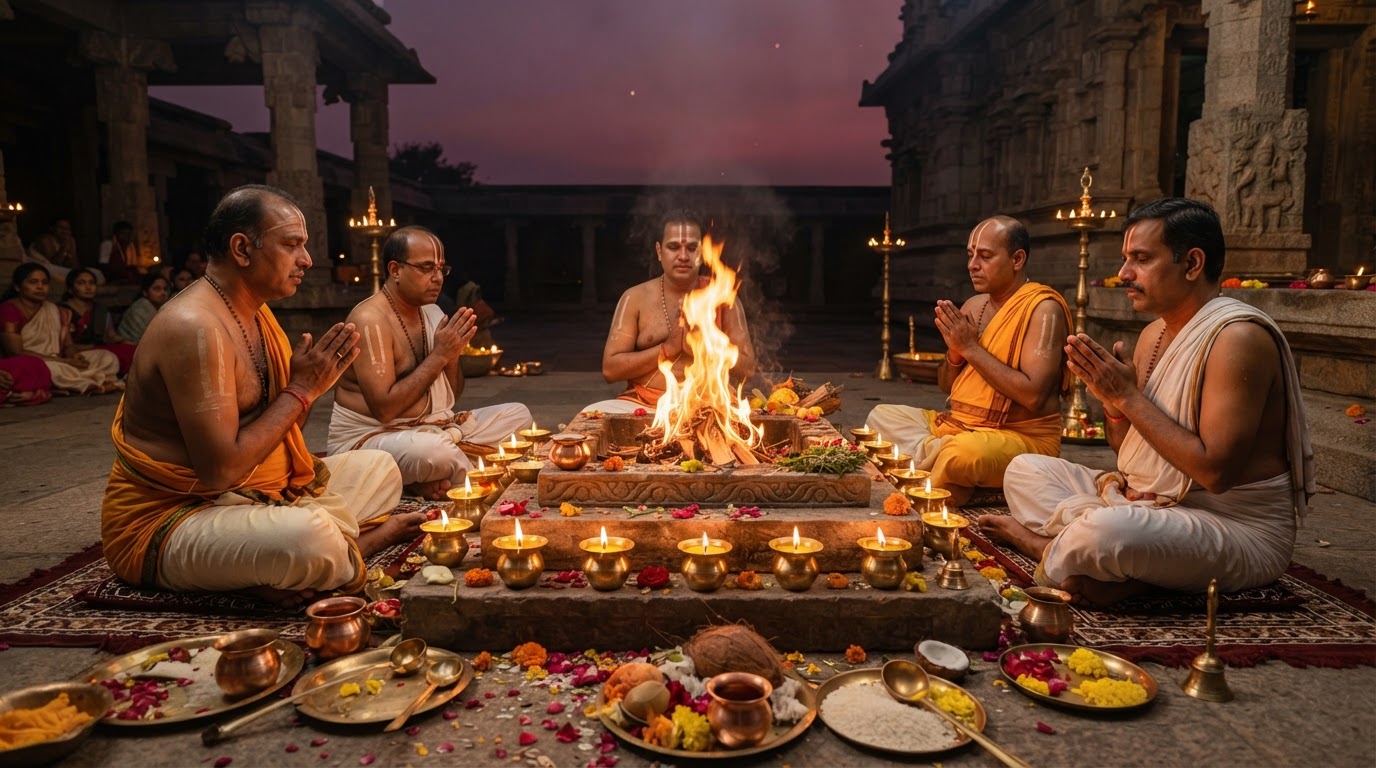
Here in Ottawa, far from the banks of the Ganges and the cities where Dayanand walked, the same call reaches us. To be Arya Samaj is to carry that call into our own place and time. It is to study the Vedas and to teach our children what they mean. It is to keep the Havan alive, not as a relic, but as a living prayer. It is to welcome every person, whatever their background, because the Vedas belong to all who seek the truth.
Most of all, it is to remember that a tradition is never truly lost while even one person sincerely keeps it. And it is never truly renewed until a community takes it up together.
Take Up the Call
You are invited to take up that call with us. The easiest first step is simply to come — to sit at the monthly Havan, to hear the mantras, to feel the warmth of the sacred fire, and to ask your questions among friends. Join us on the second Sunday of each month, from 3 to 6 p.m., at the Hindu Temple of Ottawa-Carleton, 4835 Bank Street, Ottawa. Come as you are. The Vedas have been waiting for you all along.