One River, Many Currents
Hinduism is not a single, narrow stream. It is a great river, fed by many currents — the Vedas, the Upanishads, the epics, the Bhakti traditions, the many schools of philosophy, and the living practice of countless families across the world. Arya Samaj is one of those currents. We do not stand apart from the Hindu family; we flow within it, carrying forward a particular understanding of what our shared heritage means at its deepest root.
To understand Arya Samaj is to understand a reform movement that arose from within Hinduism, addressed to Hindus, drawing entirely upon Hindu scripture. Maharshi Dayanand Saraswati did not seek to create a new religion. He sought to call Hinduism back to its own first principles — the truths found in the Vedas, which he held to be the original and highest source of our tradition.
What We Share With Every Hindu
There is far more that unites Arya Samaj with the wider Hindu world than separates us. We honour the same sacred texts. We revere the same sages and teachers. We gather for the same sacred occasions — Diwali, Havan, prayer, festival, and pilgrimage. We share the same daily values: truthfulness, compassion, respect for elders, the dignity of every human being, the pursuit of knowledge, and the practice of seva, selfless service.
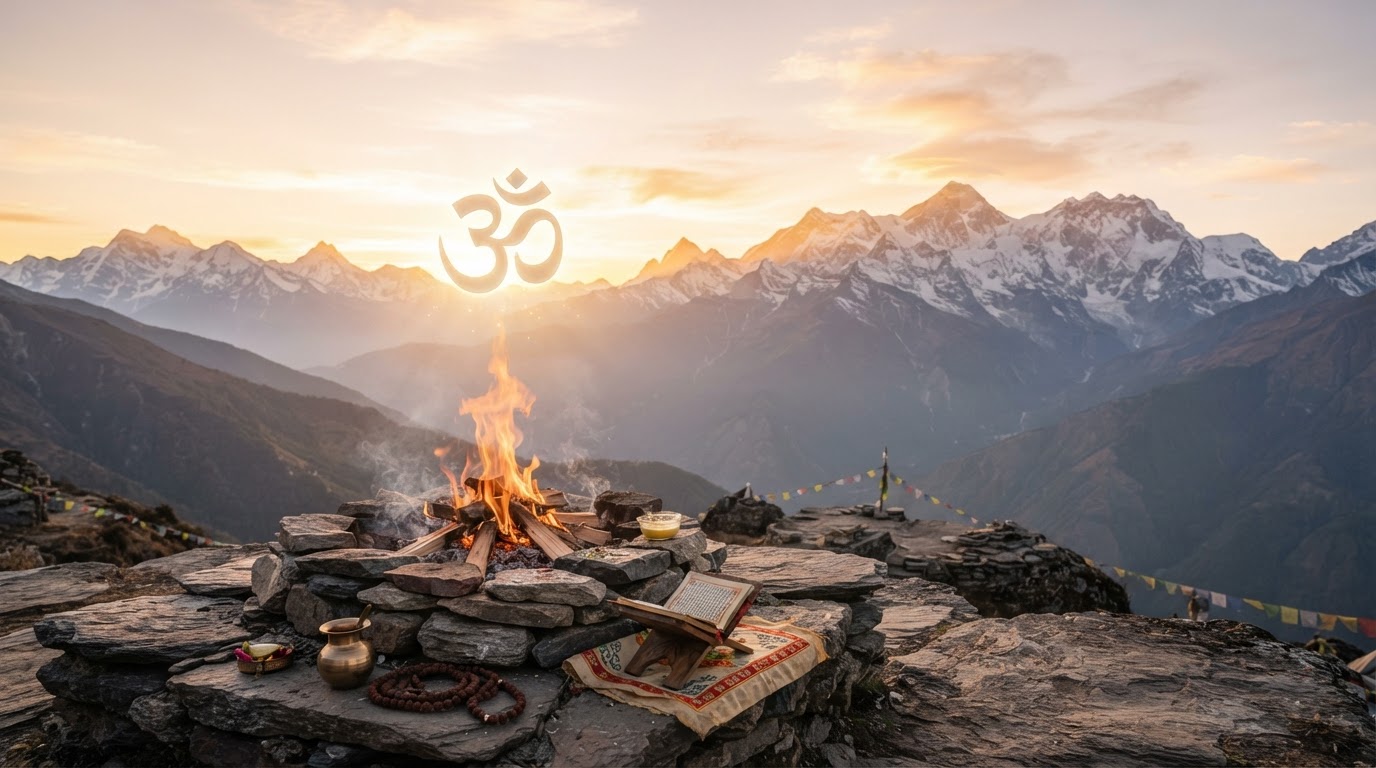
When we chant Om, when we offer into the sacred fire, when we recite the Gayatri Mantra, we are doing what Hindus have done for thousands of years. These are not Arya Samaj practices alone — they are the inheritance of the entire Hindu family. We rejoice in that shared inheritance, and we welcome every opportunity to celebrate it alongside our fellow Hindus.
Where Arya Samaj Offers a Distinct Voice
What distinguishes Arya Samaj within the Hindu family is not opposition but emphasis. We emphasise a return to the Vedas as the primary authority. We emphasise reason and free inquiry as the path to truth, encouraging every person to test teachings against their own understanding and conscience. We emphasise the oneness of God — formless, eternal, and beyond all images — while respecting the many ways Hindus approach the divine. And we emphasise social reform: the equality of all human beings regardless of caste or gender, the dignity of women, and education for every child.
These emphases are not new inventions. They are recoveries of truths already present in the Vedas and the Upanishads. Maharshi Dayanand held that the reforms he advocated were not reforms of Hinduism but reformations of Hindu practice — a clearing away of later accretions so that the original light might shine more clearly.
Standing With, Not Against
Arya Samaj has sometimes been described as critical of certain later traditions — the excesses of caste, the worship of images, the dependence on inherited ritual without understanding. But criticism, in our view, is not rejection. We honour the devotion that animates every sincere Hindu practice, even where our understanding of it differs. To call a brother or sister toward the Vedas is not to call them away from their love of God; it is to invite them to trace that love back to its source.
We stand with the wider Hindu community in friendship and respect. We attend one another's gatherings. We mark one another's festivals. We welcome one another's children. The Hindu family of Ottawa is strengthened when all its currents flow together with mutual goodwill, each contributing its own gifts to the common stream.
An Invitation to Walk Together
For any Hindu in Ottawa — whether your family's tradition is Vaishnava, Shaiva, Shakta, Smarta, or Arya Samaj — you will find a welcome at our gatherings. The monthly Havan is an offering to the whole community. The sacred fire does not ask which current of the river brought you to it. It asks only that you come with a sincere heart.
Come and see for yourself. Join us at the monthly Havan, held every second Sunday from 3 to 6 p.m. at the Hindu Temple of Ottawa-Carleton, 4835 Bank Street, Ottawa. Bring your family, bring your questions, and bring your own tradition's understanding. In the warmth of shared prayer, you may find that the differences that seemed so large grow small, and the values we hold in common shine all the more brightly.